
What Is Palm Analysis? The Basics of Reading Palm Lines
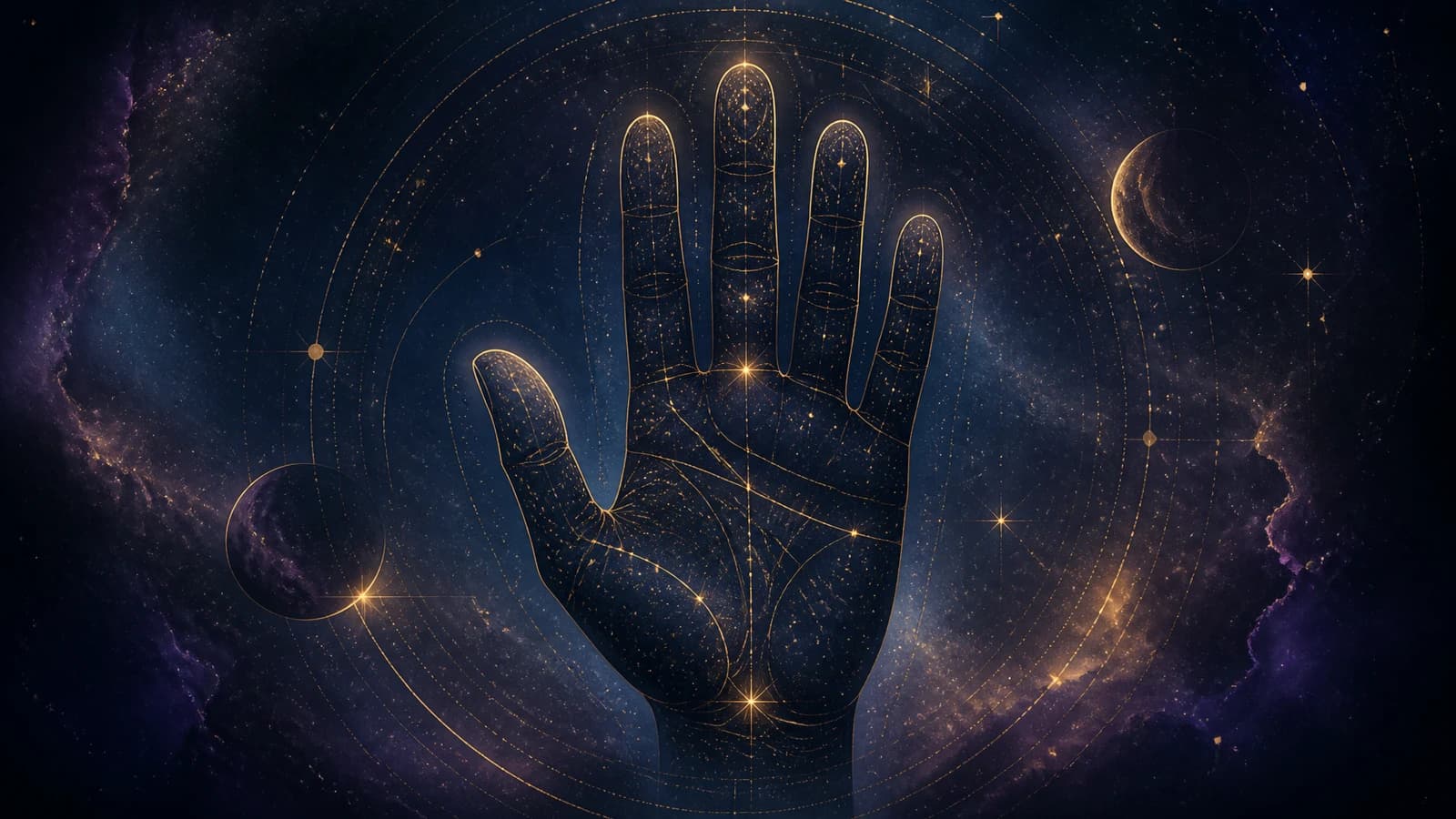
This guide explains what palm analysis (palmistry) is, how the main lines and mounts are typically read, common mistakes people make when interpreting a palm, and the methodological limits of this practice. The content offers general information only and does not promise certain outcomes.
What Is Palm Analysis? Meaning and Origins
Palm analysis, often called palm reading or palmistry, is an observational practice in which the lines on a person's palm, the fleshy mounts at the base of the fingers, the overall shape of the hand, and finger length are interpreted symbolically. In the Western tradition, this field is usually called chiromancy, and it exists independently of astrology as its own symbolic language — so it should not be blended with astrological interpretation. The main focus in palm analysis is typically three primary lines: the life line, the head line, and the heart line. Beyond these, some readers also consider secondary markings such as the fate line and the sun line. Each line's length, depth, breaks, and branching points are associated with different themes; for example, a deep, unbroken life line is often interpreted as a theme of general vitality or resilience, but this interpretation carries no factual information about lifespan. Palm analysis may suggest a person's current tendencies, character themes, and possible behavioral patterns, but it is not an exact science and cannot fully explain someone's entire life story on its own. Most modern practitioners present this practice as a tool for personal reflection and self-awareness rather than a deterministic system of prediction.
How to Calculate a Palm Reading: A Step-by-Step Approach
Before starting a palm analysis, the first question is which hand to examine; a common convention treats the dominant hand (usually the writing hand) as reflecting a person's current lifestyle, while the other hand is often read as representing innate potential — though this distinction varies between readers and is not a fixed rule. A practical approach can be broken into steps. First, look at the overall shape of the hand — square, rectangular, conic, or mixed hand types are each associated with different temperament themes. Second, examine the three main lines (life, head, heart) individually, noting where each begins, how long and deep it is, and whether it shows any breaks. Third, assess the mounts beneath the fingers (commonly labeled Venus, Jupiter, Saturn, Sun, and Mercury mounts) based on how pronounced they appear; a notably full mount may be read as suggesting that theme feels strong in the person's temperament. Fourth, check for secondary lines sometimes labeled fate line, marriage line, or health line, if present — though their presence or absence alone never determines a conclusion. Fifth, all these observations are combined into one holistic picture rather than treated separately; drawing broad conclusions from a single line is considered methodologically weak. If using a digital tool instead of an in-person reading, a clear, well-lit photo of the palm with visible lines is essential — blurry or angled images can lead to inaccurate readings. Astro Tekin's /el-analizi section offers this kind of observation in a structured format, giving users a starting point to reflect on general themes; results are not certain and depend on the person's full life context.
Common Mistakes and the Limits of the Method
The most common mistake in palm analysis is drawing a firm conclusion from a single line or marking. A small break in the head line, for instance, does not by itself signal a major crisis — such details need to be considered as part of a holistic reading. Another frequent error is examining only one hand while ignoring that the two hands can carry different themes, which can leave the interpretation incomplete. It's also easy to overlook that palm lines can shift slightly over time due to skin elasticity, aging, or physical activity — meaning a reading done years ago may no longer reflect the current state of the hand. Methodologically speaking, palm analysis is not an experimental science built on standardized criteria; naming conventions and the weight given to different lines can vary considerably between traditions and practitioners. Because of this, the findings from a palm analysis may not always line up with insights from a birth chart, a tarot spread, or other symbolic tools — and that's expected, since each system uses its own symbolic language. Users are advised not to treat this analysis as the sole reference point for major life decisions involving health, legal, or financial matters; consulting the relevant qualified professionals is a more appropriate approach for those areas. Palm analysis can offer a starting point for personal reflection and self-awareness, but it does not provide certainty.
Methodology Note: How This Analysis Is Prepared
The palm analysis content on Astro Tekin draws on classical definitions long established in the Western chiromancy literature: the life, head, and heart lines, along with mounts traditionally labeled Venus, Jupiter, Saturn, Sun, and Mercury form the backbone of this framework. Similar themes can appear under different terminology in other cultural traditions (such as Western chiromancy versus Indian palm-reading traditions); this article focuses specifically on the Western tradition and keeps it separate to avoid mixing terminologies. Interpretations are presented within a symbolic framework, and no empirically verified causal relationships are claimed. On the user experience side, image clarity and consistent observation conditions matter; it's normal to see small differences between photos of the same hand taken at different times, and this reflects natural variability rather than an error in the system.
Frequently asked questions
No, palm analysis is not a system verified by standard scientific methods. It's considered a symbolic interpretive tradition, and its results are not certain; it can be viewed as a reflective tool for personal awareness rather than a predictive science.
A common convention treats the dominant hand as reflecting current life tendencies, while the other hand is read as representing innate potential, but this distinction is not a fixed rule, and examining both hands together is usually recommended.
Yes, skin elasticity, aging, and physical factors can cause small changes in how palm lines appear. Because of this, a reading should always be based on a current observation, and no single reading offers permanent certainty.
No, palm analysis and an astrological birth chart are separate symbolic systems. They may occasionally suggest similar themes, but one does not replace the other; different methods offer different perspectives.
Sources and method
This content is based on classical line and mount definitions from the Western chiromancy tradition (life, head, and heart lines; Venus, Jupiter, Saturn, Sun, and Mercury mounts). It has not been mixed with astrology or other symbolic systems; each system is treated separately within its own context.
Limitations
This article is intended for general informational purposes only and is not a substitute for professional services. Palm analysis does not produce certain outcomes and offers no guarantees; it should not be used as the sole basis for decisions involving health, legal, or financial matters. Interpretations depend on the full context of a person's hand and life, and can vary between practitioners.