
How to Create a Birth Chart: Meaning, Steps, and Common Mistakes
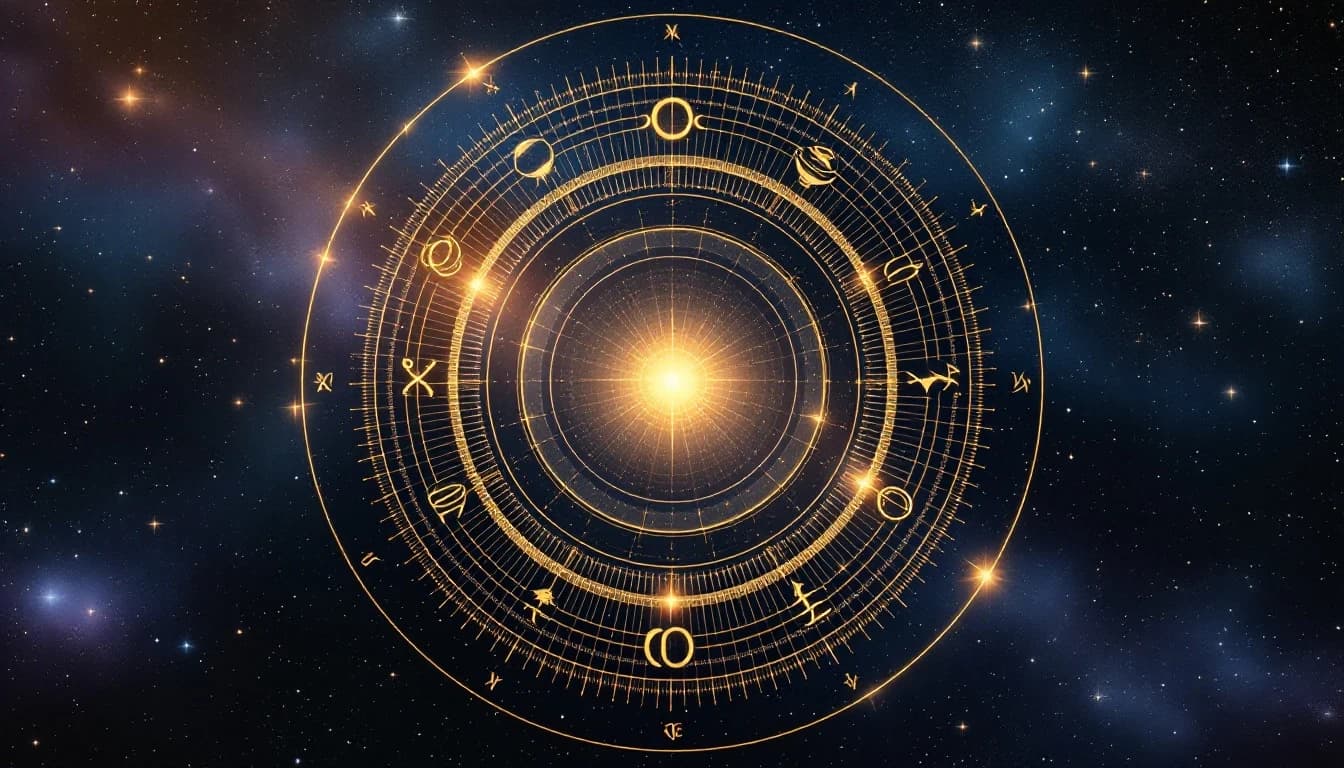
Creating a birth chart means calculating the positions of the planets, zodiac signs, and houses in the sky at the exact moment and location of someone's birth, then turning that data into a personal astrological map. This guide walks through what a birth chart is, how to calculate one step by step, the mistakes people commonly make, and the methodology behind chart interpretation.
What Is a Birth Chart? Meaning and Core Idea
Creating a birth chart is the process of mathematically calculating how the sky looked from a specific geographic location at the exact moment someone was born, then converting that data into a visual diagram. This diagram shows which zodiac sign and degree the Sun, Moon, and other planets occupy, along with how the twelve houses (including the rising sign) are distributed across the wheel. In Western astrology, the birth chart — also called the natal chart — is the foundational tool used to explore personality tendencies, relationship dynamics, and broader life themes. That said, a chart on its own does not offer a fixed personality profile or any certainty about the future.
Technically, creating a birth chart requires an ephemeris (a table of planetary positions) and an accurate time-zone calculation. Once someone's birth date, time, and location are entered, software or an astrologer determines the exact degree of every planet at that moment. For example, a chart calculated for March 15, 1990, at 2:20 PM in Istanbul can look quite different from a chart for someone born the same day at a different hour — the rising sign and house layout may shift substantially. This is why creating a birth chart is a far more layered process than simply learning your sun sign.
A common point of confusion is treating the sun sign as if it were the entire birth chart. The sun sign is only one component. A full chart also includes the Moon sign, rising sign, and personal planets like Mercury, Venus, and Mars, as well as the outer planets — Jupiter, Saturn, Uranus, Neptune, and Pluto. A meaningful interpretation comes from considering all of these together; drawing conclusions from a single planetary placement can be misleading.
How to Calculate a Birth Chart: Step-by-Step Method
Calculating a birth chart requires three essential pieces of information: birth date, birth time, and birth place (city and country). When these three data points are accurate, a calculation engine can determine planetary positions and house boundaries reliably. Birth time matters enormously because the rising sign and house system depend on minute-level precision; if the time is unknown, the chart is often generated using an approximate or default noon time, which reduces the reliability of rising-sign and house interpretations.
Step 1: Gather accurate birth details. A time confirmed by a birth certificate or official record gives the most reliable result. Rough estimates like 'early morning' can produce an incorrect rising sign.
Step 2: Verify the latitude and longitude of the birth location, along with whether daylight saving time was in effect at that point in history. Daylight saving rules have varied by country and by year, especially for older dates, and overlooking this detail can shift the entire chart by an hour or two.
Step 3: Choose a house system. Placidus, Koch, and Whole Sign are different house systems that can produce different house boundaries from the exact same birth data. Placidus is the most commonly used system in Western astrology, though simpler systems like Whole Sign are also widely used. Knowing which system was applied matters if you ever compare your chart across different sources.
Step 4: Read the resulting planet-sign-degree-house table. For instance, if the Sun is in Aries in the 10th house, this may suggest a connection between personal identity themes and career or public visibility — but this kind of reading only makes full sense once it's considered alongside the Moon, rising sign, and aspects.
Step 5: Examine the aspects — the angular relationships between planets, such as conjunctions, squares, trines, and oppositions. Aspects show how planets 'talk' to one another and turn the chart from a static list into a dynamic system. On Astro Tekin, you can explore your own birth chart through /analyses, where all of these calculation steps are handled automatically.
Common Mistakes When Creating a Birth Chart
The most frequent mistake is entering an estimated birth time. The rising sign changes roughly every two hours, so an inaccurate or missing birth time can invalidate the entire house layout and rising-sign interpretation. The second common mistake is trying to interpret the whole chart based on the sun sign alone — it's the most visible component, but never the only one.
A third mistake is applying generic interpretations pulled from unrelated sources directly to a specific person. Two people can share the same sun sign while having completely different rising signs, Moon placements, and house distributions, which means generic sign-based content is never a substitute for an actual birth chart. A fourth mistake is ignoring house-system choice altogether; Placidus and Whole Sign can produce different house boundaries from identical birth data, which matters especially for planets sitting near a sign boundary.
A fifth and important mistake is treating the birth chart as a fixed, deterministic map of fate. Astrology is an interpretive language that points to tendencies and potential themes — it cannot claim that a particular planetary placement guarantees a specific outcome. A chart may suggest possible tendencies in someone's life, but individual choices, circumstances, and timing can always play a determining role. Finally, mixing up different astrological traditions — for example, Vedic astrology uses a different calculation method for zodiac signs than Western astrology — is another common source of confusion. This article focuses exclusively on creating a birth chart within the Western astrology framework.
Methodology and Sources Behind Birth Chart Interpretation
Birth chart calculations rely on astronomical ephemeris data, which mathematically reflects the actual sky positions of the planets at a given time and location. Astro Tekin's calculation approach is based on the standard tropical zodiac and widely used house systems; at the interpretation layer, we draw on established frameworks from classical Western astrology literature regarding planet-sign-house-aspect relationships. These interpretations offer a symbolic language and do not claim scientific predictive power or behavioral certainty.
Reading a birth chart calls for a holistic approach — no single planet or house should be evaluated in isolation. For instance, Mars appearing in a challenging aspect doesn't automatically mean a 'tendency toward conflict' on its own; that theme becomes more meaningful once it's read alongside the Moon's condition, the relevant house ruler, and the chart's overall balance. Individual symbol explanations you might read elsewhere are always dependent on the full chart and should not be generalized out of context.
Frequently asked questions
Without an exact birth time, the rising sign and house boundaries cannot be calculated reliably. In that case, the chart is often generated using an approximate or default noon time, and rising-sign and house interpretations should be treated cautiously. The Sun, Moon, and planetary sign positions can still offer meaningful information, though.
No. The sun sign is just one piece of the chart. A full birth chart includes the Moon, rising sign, all other planets, and the house system. This is why two people with the same sun sign can have very different charts overall.
No, a birth chart doesn't offer certainty. It may suggest possible tendencies and recurring themes, but individual choices and life circumstances can always shape the outcome, so nothing is fixed or guaranteed.
Yes. Systems like Placidus, Koch, or Whole Sign can produce different house boundaries from the exact same birth data. This can lead to different readings, especially for planets sitting close to a sign boundary, so knowing which system was used matters.
Sources and method
This content is based on the standard tropical zodiac and common Western astrology house systems (such as Placidus and Whole Sign), combined with classical astronomical ephemeris calculations and established birth chart interpretation frameworks. It has not been mixed with other traditions such as Vedic astrology, Chinese BaZi, Tibetan astrology, or Egyptian astrology.
Limitations
Birth chart interpretations are symbolic and do not determine a person's complete life story or future with certainty. If the birth time is inaccurate or unknown, rising-sign and house interpretations lose reliability. This content is intended for general informational purposes only and is not a substitute for professional services; it is not medical, legal, or investment guidance and should not be used for such decisions.