
What Is a Personal Transit Analysis and How Do You Interpret It?
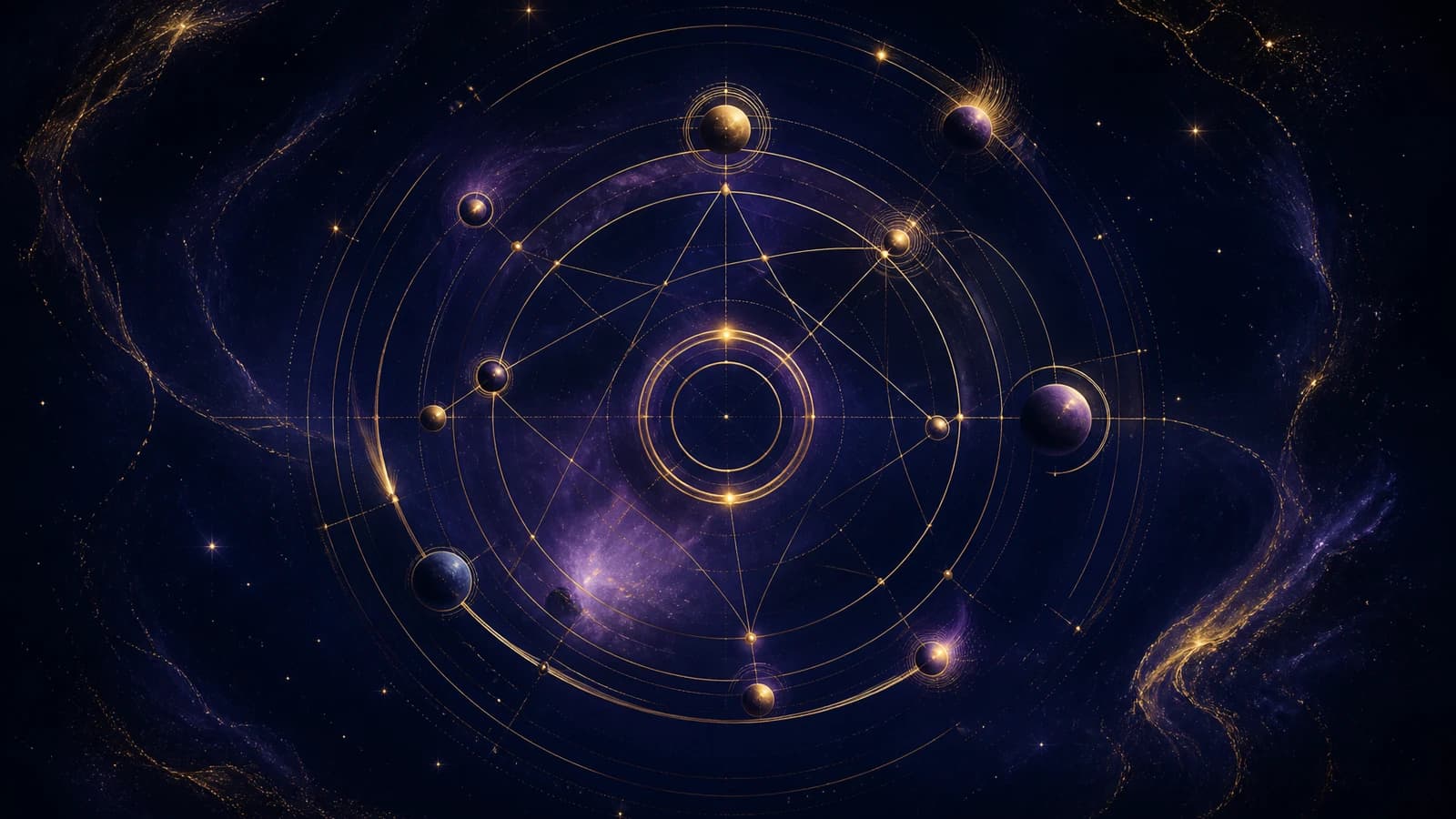
A personal transit analysis looks at the angles current planetary positions form with points in your birth chart to read shifting periodic themes. This guide covers the definition, calculation logic, interpretation steps, common mistakes, and the limits of this method.
What Is a Personal Transit Analysis?
A personal transit analysis is a method of interpretation that keeps your natal (birth-moment) planetary positions fixed while examining the angles that the planets' current positions in the sky form with those natal points. In Western astrology, 'transit' means 'passage' — as planets like Saturn, Jupiter, and Mars move through the zodiac, they periodically form conjunctions, squares, trines, or oppositions with your Sun, Moon, Ascendant, or personal planets. These angles may suggest that certain themes become more prominent during that period, but they never guarantee a specific event on their own. What sets personal transit analysis apart from natal chart reading is that it isn't a static personality snapshot — it's a shifting periodic layer that unfolds over time. For example, when transiting Jupiter forms a trine to your natal Sun, this period is often interpreted as a time of expansion, growing confidence, or emerging opportunities; but other factors in your overall chart can strengthen or soften that theme. Because of this, transit analysis read in isolation from the natal chart is incomplete — it's always a complementary layer meant to be evaluated together with the birth chart. In the /analyses section of Astro Tekin, the transit view built from your birth details is designed to present both layers together.
How to Calculate and Apply a Personal Transit Analysis
To perform a personal transit analysis, you first need an accurate and complete natal chart: birth date, birth time, and birth place. Because birth time is especially critical for the Moon sign and Ascendant degree, if the time is unknown, part of the transit interpretation — particularly house-based readings — will necessarily remain more general. The practical steps can be summarized as follows: first, determine the exact degrees of the planets in your natal chart. Next, pull the transiting planetary positions for the date you want to examine, typically using an ephemeris table or astrology software. Then identify the angles the transiting planets form with your natal points — usually 0, 60, 90, 120, and 180 degrees, allowing for a reasonable orb. Slow-moving planets — Jupiter, Saturn, Uranus, Neptune, Pluto — tend to mark longer, months-long periodic themes, while faster planets like the Sun, Mercury, Venus, and Mars can reflect daily or weekly fluctuations. When interpreting, it matters which house and which natal planet is being activated: for instance, transiting Saturn squaring your natal Moon may suggest a sense of emotional responsibility or restriction, but how that theme actually plays out in daily life depends on your overall chart, life circumstances, and other transits active at the same time. In practice, the recommended approach is not to read a single transit in isolation, but to evaluate several active transits together in relation to the overall structure of the natal chart. Astro Tekin's /analyses tool automates this multi-layered evaluation to offer a more complete periodic picture.
Common Mistakes in Personal Transit Analysis and the Limits of the Method
The most common mistake in personal transit analysis is treating a single transit as an absolute indicator that explains an entire life period. Statements like 'my Saturn return is coming, this will be a brutal year' ignore other supportive or balancing factors present in the person's natal chart. The very same transit can play out very differently alongside a strong supportive Jupiter aspect. A second frequent mistake is placing too much certainty on house-based interpretations without knowing the birth time; if the time is wrong, the Ascendant and house boundaries shift, which can produce misleading conclusions about which area of life a transit actually affects. A third mistake is being either too loose or too strict with orb (angle tolerance) — using overly wide orbs to connect everything to everything can make the analysis meaningless. Fourth, relying solely on short-lived transits (like those involving the Moon or Mercury) for long-term decisions isn't advisable, since these fast-moving transits tend to reflect daily mood fluctuations rather than lasting shifts. The limitations of the method itself should also be stated clearly: transit analysis is not a system that predicts the future with certainty. It may suggest possible tendencies and psychological or situational themes, but the person's choices, environmental circumstances, and the chart as a whole ultimately shape the outcome. For this reason, transit interpretations do not provide certain results and are not a substitute for a person's own decisions — they're better understood as tools for general awareness and self-reflection.
Methodology: Sources and Approach
The personal transit analysis content on Astro Tekin is based on the classical Western astrology tradition of transit interpretation: a symbolic language built on planetary cycles, aspect theory, and house systems that has been used for centuries. Interpretations are crafted to reflect commonly observed psychological and situational themes associated with particular planet-aspect-house combinations; these themes draw on widely used interpretive patterns found in general astrological literature and make no claim to individual certainty. Calculations rely on standard ephemeris data and the tropical zodiac system; different astrological schools (such as sidereal systems) can produce different results, and this article addresses only the Western/tropical approach. The language used throughout is deliberately probabilistic — phrases like 'may,' 'can suggest,' and 'often interpreted' are preferred, because astrological interpretation is a symbolic reflective framework, not an empirically validated predictive system.
Frequently asked questions
General planet-to-planet angles can be calculated without a birth time, but house-based interpretations — which area of life is affected — depend on it. If the time is unknown, transit readings remain more general, and house-level detail depends on having the full chart.
No, personal transit analysis doesn't offer certainty. It may suggest that certain periodic themes could become more prominent, but the outcome depends on the person's choices, life circumstances, and the chart as a whole; it doesn't produce a certain result.
Generally, the slow-moving planets — Jupiter, Saturn, Uranus, Neptune, and Pluto — forming angles with natal personal points (Sun, Moon, Ascendant) are interpreted most often, since they carry longer-lasting and more distinct themes; however, faster planetary transits are also worth noting for daily fluctuations.
You can enter your birth details in the /analyses section to view your current transit picture alongside your natal chart; the /tarot and /ruya sections also offer complementary self-reflection perspectives.
Sources and method
This content is based on the classical Western astrology tradition of transit interpretation, the tropical zodiac, and general interpretive patterns drawn from standard ephemeris data; sidereal or other school approaches are outside the scope of this article.
Limitations
Personal transit analysis is a symbolic and probabilistic interpretive tool; it is not an empirically validated predictive system. Missing birth time, differences in orb tolerance, and the overall context of the chart can all affect the results. This content is for general informational purposes only and is not a substitute for professional services; it should not be used for medical, legal, or financial decision-making — this is not medical, legal, or investment guidance.