
Free Birth Chart: What It Is and How to Read One
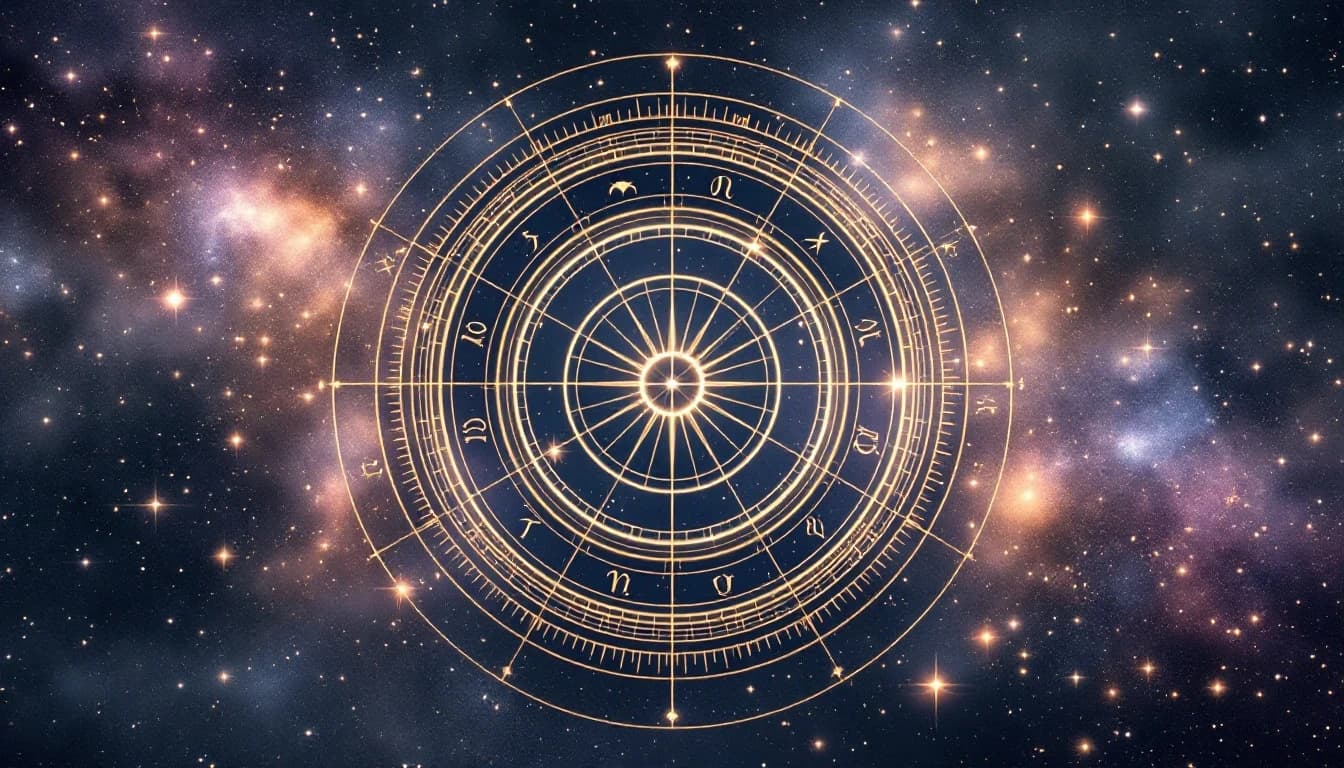
This guide is written for readers searching for a free birth chart who want to understand what the chart actually is, what data it needs, how to start reading it, and which interpretation mistakes come up most often. Uncertainty language is kept intentional throughout: a birth chart does not deliver fixed answers, but it can support a genuine process of self-reflection.
What Is a Free Birth Chart?
A birth chart (or natal chart) is a symbolic map of where the planets, the Sun, the Moon, and the zodiac signs were positioned at the exact moment someone was born. It's calculated from three pieces of data — birth date, birth time, and birth place — and all three matter for accuracy. When people search for a 'free birth chart,' they usually mean one of two things: getting a technical wheel or table showing planetary positions, or actually starting to understand what those positions mean. A birth chart goes well beyond a Sun sign; it layers in the Moon sign, the rising sign (Ascendant), house placements, and the angles between planets (aspects) to build a much richer picture. So instead of answering only 'what's my sign,' it offers a framework for how personality tendencies, emotional patterns, and different life areas may interact. One important point: a birth chart doesn't define a personality on its own — a commonly used approach is to read the elements together, since isolated placements rarely tell the full story. Free calculation tools typically generate planetary degrees, house cusps, and basic aspects automatically, but making sense of that output still requires some astrological literacy and a holistic read of the chart. You can generate and explore a full birth chart calculation on Astro Tekin's /analyses page.
How to Calculate a Free Birth Chart
Calculating a birth chart requires three core inputs: birth date, birth time, and birth place (city/country). Birth time matters more than people expect — the rising sign and house placements can shift with even a few minutes' difference, so when the time is missing or approximate, the chart may still show broad tendencies, but the Ascendant and house layout lose reliability. The process generally works like this: first, planetary positions at the moment of birth are pulled from ephemeris data; then the birth location's geographic coordinates and correct time zone (including any daylight saving adjustments) are factored in to plot the rising sign and house lines; finally, the aspects between planets — conjunctions, squares, trines, oppositions, and so on — are calculated to complete the chart. Free online tools automate this entire process; you enter your birth details and the system generates the wheel. But the visual output alone doesn't interpret anything — it's just a representation of the data. A meaningful reading requires looking at the signs and houses the planets fall in, the aspects between them, and the chart's overall pattern (for example, whether one element or modality dominates). If the birth time is unknown, some approaches default to a placeholder like 12:00 noon; in that case, the rising sign and house placements shouldn't be treated as reliable, and only the Sun and Moon sign positions can reasonably be assessed. For a more detailed and personalized calculation, you can enter your birth details on Astro Tekin's /analyses page.
Common Mistakes and the Limits of a Free Chart
There are a few mistakes people commonly make when using free birth chart tools. The first is entering a guessed birth time or skipping it entirely — this significantly affects the rising sign and house placements, weakening the personalized parts of the chart. The second is focusing only on the Sun sign and trying to interpret the whole chart from it, when the Moon sign reflects emotional tendencies, the rising sign shapes outward presentation, and personal planets like Mercury, Venus, and Mars fill in communication style, relationship patterns, and motivation from different angles. The third mistake is treating a single placement — say, 'Mars in my sign causes conflict' — as an isolated, fixed fact independent of the rest of the chart; a commonly applied principle in astrological interpretation is that the chart needs to be read as a whole, since no single element represents the entire picture. A fourth frequent error is blending different astrological traditions — Western astrology and Vedic astrology, for instance — into one interpretation; these two systems use different zodiac calculation methods (tropical versus sidereal) and can produce genuinely different results, so it's important to pick one tradition and stay consistent. Finally, the automated interpretations generated by free tools tend to rely on generic templates; these texts don't always dig into a chart's unique aspect combinations, house rulerships, or point-based calculations like the lunar nodes. Because of this, it can help to treat a free chart as a starting point, then turn to professional interpretation or a more comprehensive analysis tool for a more balanced read of what the chart is actually showing.
Methodology: How Birth Charts Are Interpreted
The general method for interpreting a birth chart starts with the big picture: which element (fire, earth, air, water) and modality (cardinal, fixed, mutable) shows up most, which houses have the heaviest concentration of planets, and which aspect types — harmonious or tense — recur most often. From there, the personal planets (Sun, Moon, Mercury, Venus, Mars) are considered together with the rising sign to build a general framework for personality tendencies. The social planets (Jupiter, Saturn) and outer planets (Uranus, Neptune, Pluto) are usually linked to broader life themes and generational influences; because outer planets move slowly and affect entire age groups similarly, personalized readings tend to focus more on their house placement and aspects rather than their sign alone. Western astrology typically uses the tropical zodiac along with a house system such as Placidus — a seasonally based calculation method that can produce different results than the sidereal systems used in Vedic astrology, which track actual constellation positions. This article and the Astro Tekin platform default to the Western astrology framework; any use of a different tradition is clearly stated. The underlying data comes from reliable ephemeris tables and standard astrological calculation methods, but the interpretation itself remains a symbolic framework, not a scientific predictive tool. Approached as an exercise in self-awareness and reflection, birth chart reading can serve a genuinely useful function.
What to Expect From a Birth Chart — and What Not To
A free birth chart can offer a starting point for understanding general tendencies: which areas of life may feel more naturally comfortable, and which are often interpreted as areas of tension or growth. For example, having the Moon in a water sign might suggest heightened emotional sensitivity — but that shouldn't be turned into a firm conclusion without considering it alongside other factors, like Saturn's placement or the relevant houses. What a birth chart shouldn't be expected to provide is a fixed, unchangeable future scenario or a complete definition of someone's personality. Astrology is often used as a tool for self-reflection and thinking through possible tendencies, but a person's choices, circumstances, and lived experience can matter just as much as anything in the chart. For that reason, birth chart readings should never substitute for medical, legal, or investment decisions — those situations call for the relevant professional services. If you'd like to explore your birth chart further, you can find detailed readings on Astro Tekin's /analyses page, browse dream interpretations under /ruya, or check out other self-reflection tools like /tarot and /el-analizi. Since each of these represents a distinct and independent tradition, they shouldn't be blended into one single interpretation — each is best understood within its own framework.
Frequently asked questions
When the birth date, time, and place are entered correctly, the planetary positions can be calculated with technical accuracy. But the depth and personal relevance of the interpretation depend on the tool's scope and how precise the birth time is; if the time is uncertain, the rising sign and house placements can lose reliability.
Yes, elements like the Sun and Moon sign can still be calculated without a birth time. But since the rising sign and house system depend heavily on exact timing, those parts of the chart can't be reliably interpreted without it.
Free tools generally offer basic planetary positions and generic pattern-based interpretations. Paid or more comprehensive analyses tend to dig deeper into aspect combinations, house rulerships, and personalized details, aiming for a more holistic read — a practical distinction that comes up often.
Yes — the Sun sign is just one element of the chart. The rising sign, Moon sign, and other planetary placements can fall in entirely different signs, so someone may notice traits that don't fully match typical Sun sign descriptions; this makes more sense once the full chart is considered together.
Sources and method
This content is based on the tropical zodiac framework of Western astrology and standard ephemeris/house-system calculation methods. Vedic astrology, Chinese BaZi, and other traditions are not covered here; any use of a different system would be clearly noted.
Limitations
This article is intended for general education; birth chart interpretations don't offer certainty without a full, personalized chart evaluation. When birth time is missing or approximate, the rising sign and house placements can lose reliability. This content does not replace medical, legal, or investment decision-making — it is meant only for general information and does not substitute for professional services.